


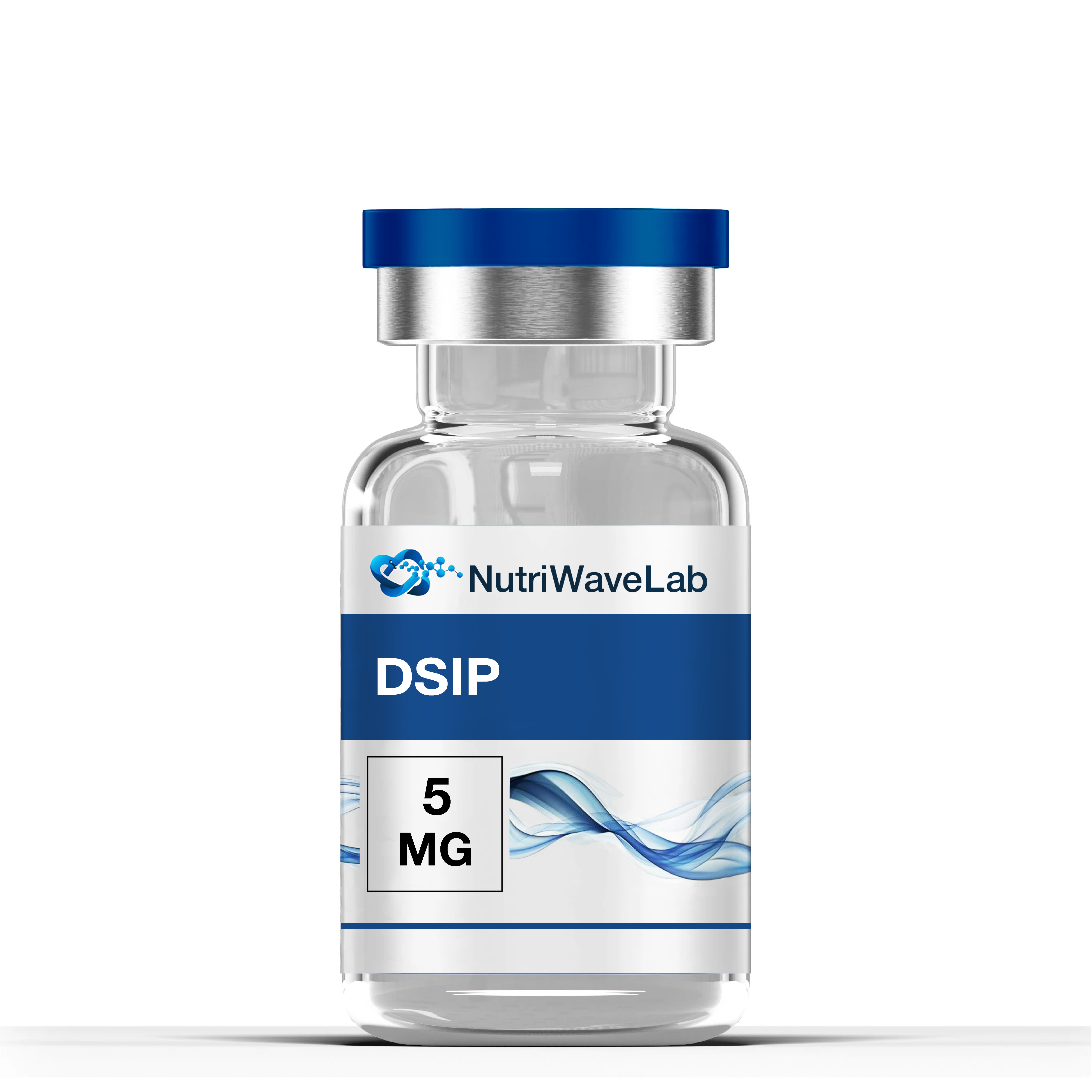
DSIP 5mg
$0.00
- when buying 5 units of goods 5% discount
- when buying 10 units of goods 8% discount
11 in stock
DSIP (Delta Sleep-Inducing Peptide)
Chemical Identity
-
Type: Endogenous neuropeptide (nonapeptide)
-
Amino Acid Sequence: Trp–Ala–Gly–Gly–Asp–Ala–Ser–Gly–Glu
-
Molecular Formula: C₃₅H₄₈N₁₀O₁₅
-
Molecular Weight: 848.82 g/mol
-
CAS Number: 62568-57-4
-
PubChem CID: 16132440
-
Synonyms: Delta Sleep Peptide, Delta Factor, DSIP
Overview
Delta Sleep-Inducing Peptide (DSIP) is a naturally occurring neuropeptide discovered in 1977 within the hypothalamus of mammals. Despite its name, DSIP is not only linked to deep (“delta”) sleep but also serves as a regulatory molecule for stress adaptation, circadian balance, mitochondrial protection, and endocrine homeostasis.
DSIP can cross the blood–brain barrier, allowing it to interact directly with central nervous system structures — primarily the hypothalamus, pituitary, and thalamic nuclei. Through this action, it influences neurotransmitters such as GABA, serotonin, and melatonin, stabilizing the body’s internal rhythms.
Mechanisms of Action
1️⃣ Regulation of Sleep Architecture
DSIP modulates slow-wave sleep (SWS) and helps restore the natural alternation between sleep stages. Animal models show increased delta-wave power and improved recovery after sleep deprivation or stress-induced insomnia.
2️⃣ Hypothalamic–Pituitary–Adrenal (HPA) Axis Modulation
DSIP interacts with CRH and ACTH pathways, helping normalize cortisol secretion and reduce hyperactivation of the sympathetic nervous system.
3️⃣ Mitochondrial and Oxidative Balance
Preclinical studies reveal DSIP’s ability to enhance mitochondrial respiration and reduce reactive oxygen species (ROS), protecting neurons from oxidative stress and hypoxic injury.
4️⃣ Neuroprotection and Stress Adaptation
By stabilizing neuronal membranes and modulating calcium and nitric oxide signaling, DSIP contributes to resistance against neurotoxicity, hypoxia, and emotional stress.
5️⃣ Hormonal Synchronization
DSIP influences the secretion of growth hormone, melatonin, and other circadian hormones, supporting systemic homeostasis.
Research Background
🧪 In Vitro Studies
-
Focus: neuronal excitability, oxidative balance, mitochondrial potential.
-
Findings: DSIP reduced cell death in oxidative stress models and normalized excitability in hypothalamic neurons exposed to glutamate or hypoxia.
-
Methods: electrophysiology, gene-expression profiling, mitochondrial assays.
🐀 In Vivo Animal Studies
-
Models: rats and mice under stress, sleep-deprivation, hypoxia, or chronic pain.
-
Outcomes:
-
normalization of delta-wave activity (EEG studies),
-
reduction in corticosterone levels,
-
improved microcirculation and recovery after ischemia,
-
modulation of nociceptive response and inflammation.
-
-
Key insight: DSIP operates as a neuroadaptive modulator rather than a simple sedative.
👨🔬 Human Pilot Research
-
Conducted in Europe and Japan (1970s – 1990s) on small volunteer groups.
-
Observed effects: improved sleep onset, fewer awakenings, normalized cortisol rhythms, and mild mood stabilization.
-
Limitations: small cohorts, mixed formulations, and short-term follow-ups — results considered preliminary.
Key Research Directions
| Area | Observed / Investigated Effect |
|---|---|
| Sleep and Circadian Rhythm | Increases delta-wave density, restores natural sleep cycles |
| Stress and HPA Regulation | Normalizes cortisol, reduces sympathetic overdrive |
| Neuroprotection & Energy | Supports mitochondrial function and ATP synthesis |
| Mood and Cognitive Fatigue | May reduce emotional reactivity, supports focus |
| Pain & Inflammation | Decreases inflammatory markers, modulates central pain processing |
Biological Summary
-
Endogenous peptide involved in sleep regulation, stress adaptation, and mitochondrial maintenance.
-
Acts through multi-neurotransmitter modulation (GABA, serotonin, melatonin).
-
Demonstrates antioxidant, neuroprotective, and homeostatic properties in preclinical models.
-
Crosses the blood–brain barrier and operates both centrally and peripherally.
Scientific Perspective
While DSIP remains a molecule of research interest, its complex mechanism and pleiotropic effects continue to be studied. The peptide serves as a valuable model for understanding how the brain orchestrates recovery, sleep depth, and metabolic resilience — a crossroads between neuroscience, chronobiology, and mitochondrial physiology.
⚠️ Disclaimer
DSIP offered for educational and laboratory research only.
Not approved for human or veterinary use.
Product Use: THIS PRODUCT IS STRICTLY FOR
SCIENTIFIC RESEARCH PURPOSES ONLY. It should only be used in laboratory
settings. All product information on this website is provided solely for
educational purposes. The law strictly prohibits introducing this product into
the body of humans or animals. Only licensed professionals should handle this
product. This product is not a drug, food, or cosmetic and should not be
improperly classified or used as such.
Reviews
Clear filtersThere are no reviews yet.